
Unlock The Secrets Of Bebop
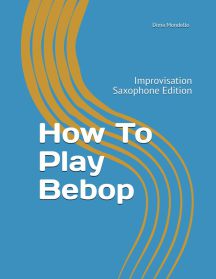
How To Play Bebop
Saxophone Edition
Imagine stepping onto the stage, saxophone in hand, channeling the lightning-fast runs and soulful bends of Charlie "Bird" Parker – the jazz legend who invented bebop. Parker's alto sax lines were revolutionary: chromatic enclosures, ii-V-I mastery, and that signature "Bird blues" phrasing that still defines modern jazz. But here's the secret: you don't need genius-level talent. You need the right system.
That's exactly what "How To Play Bebop – Saxophone Edition" delivers – a step-by-step saxophone-specific roadmap to play like the masters.
Why Bebop Changed Everything
In the 1940s, Parker and Dizzy Gillespie shattered swing-era norms. No more 4/4 dance tempos – bebop was fast (250+ BPM), complex (chromatic approaches), and improvisational. Parker's "Ornithology" or "Confirmation" solos? They're built on:
- Bebop scales (major/minor with chromatic passing tones)
- Enclosures (approach target notes from above/below)
- ii-V-I patterns (the DNA of every jazz standard)
- Rhythmic displacement (playing "around" the beat)
Parker made it sound effortless. But without guidance, those runs turn into squeaks and wrong notes.
The Saxophone Bebop Breakthrough You've Been Missing
"How To Play Bebop – Saxophone Edition" cracks Parker's code with sax-specific exercises that actually work:
✅
Chromatic Approach Mastery
Practice Parker's "target note" technique – hit the chord tone dead-on every time.
✅
Sax-Optimized Scales
Bebop dominant/major/minor scales with fingerings that flow on alto/tenor/soprano.
✅
ii-V-I Factory
Patterns covering every key – play like Bird in days.
✅
Enclosure Drills
Half-step approaches that make your lines sound pro, not random.
Your Bebop Journey Starts Here
Charlie Parker didn't practice randomly. He woodshed chromatic patterns, enclosures, and standards until they became instinct. Now you can too.
"How To Play Bebop – Saxophone Edition" – Perfect for intermediate saxophonists ready to sound like the masters.
From Beginner to Bird: Real Results
Students using this method report:
"My ii-V-I lines went from clunky
to confident in 2 weeks!" – Lukas, alto sax
"Finally nailing those enclosures – sounds like real bebop now!" – Anna, tenor
"This book distills bebop teaching into 95 pages of pure gold."
Contents
Forward 6
Tips On How To Use The Book 6
Tips On Practising 7
The Warm Up 8
Studies and Etudes 8
Artistic Development 8
Repertoire 9
How often should you practice? 9
Playing Level Requirements 10
Armatures Requirements 10
Advanced Requirements 10
Finger Exercises For Saxophone 11
Practice Plan 12
Summary 13
Minor Scales 14
Natural Minor Scale 14
Harmonic Minor Scale 14
Melodic minor Scale 14
Jazz Melodic Minor 15
Modes 16
Articulation 17
Bebop Major Scale 20
Bebop Major Scales 21
When Not To Add The #5 23
Surrounding Notes 25
Enclosure 26
Major Scale Etudes & Warm-Ups 28
C Major 29
G Major 30
D Major 32
A Major 34
E Major 36
The Bebop Dominant Scale 38
Bebop Dominant Scales 39
When Not To Add The #7 40
The II.V. I Progression 41
Major II.V.I Patterns 42
Making Your Own Patterns 44
Deflection 45
Major 7th Substitution 46
Landing On A Non-Chord Note 47
How To End A Pattern 48
Flat 9 Substitution 49
Tri-Tone Substitution 50
The 10 Rules 51
Putting It All Together 52
Now it’s your turn! 53
III.VI.II.V.I 54
2.5.1 And 3.6.2.5.1 Etudes 55
Diminished Scales 58
Half/Whole Tone Diminished Scale 60
Half Diminished 62
Minor II.V.I Progression 63
The Bebop Blues 65
The Call & Response 67
Time To Spread Your Wings 68
Whole Tone Scale 69
Playing Over Minor Chords 70
Scales For Improvisation 71
The Pentatonic Scale 72
The Blues 72
The Blues Scale 73
Blues Scales 73
The 12 Bar Blues 74
The 8 Bar Blues 75
The 16 Bar Blues 76
The Extended Blues Scale 77
Conclusion 79
Saxophonist to Listen to 80
Supplementary Material 81
About The Author 97
Available Exclusively Through Amazon
 Druckversion